
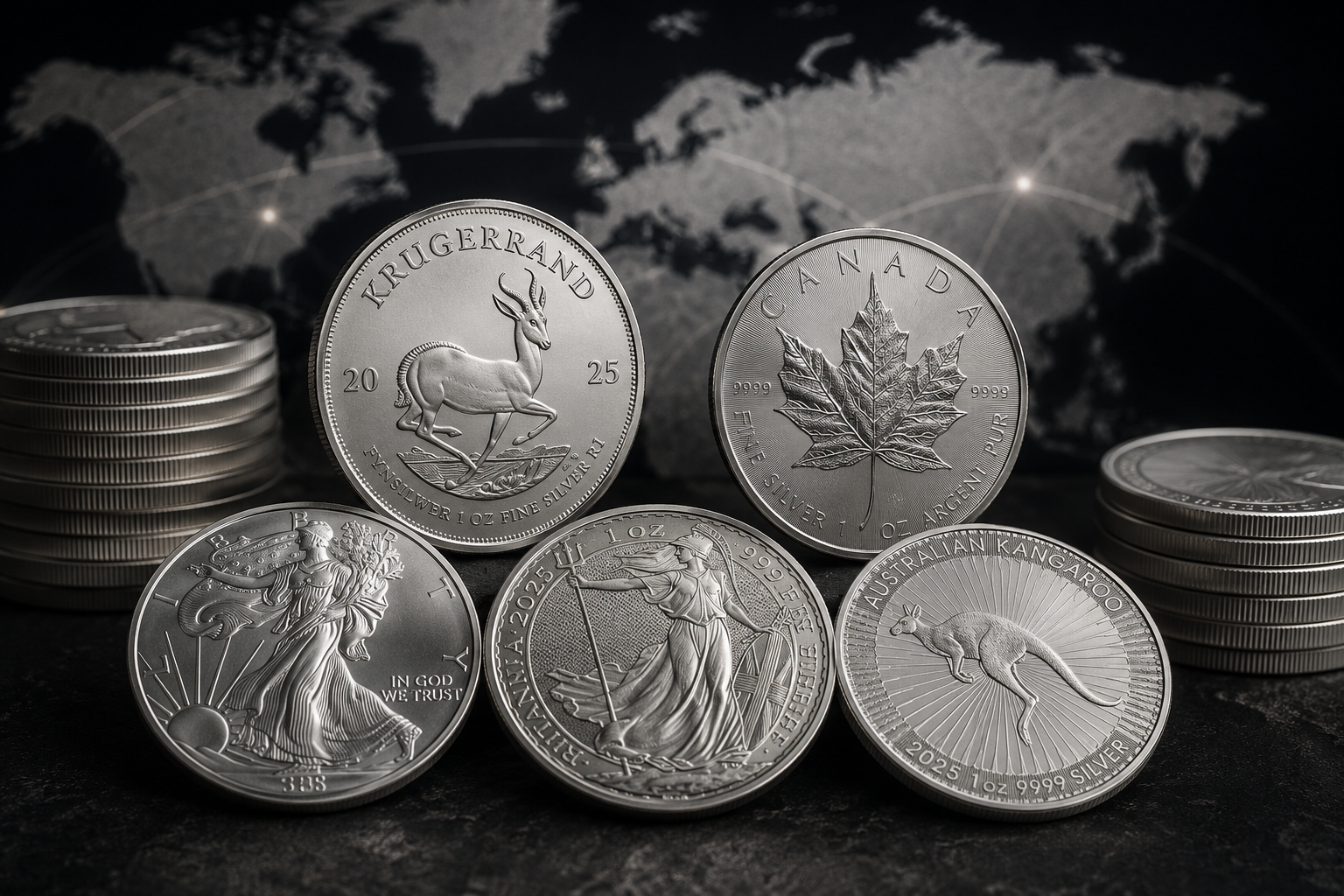
If you are looking to buy silver bullion in South Africa, one of the first questions is whether to purchase local Silver Krugerrands or international silver bullion coins such as Canadian Maple Leafs, British Britannias, Australian Kangaroos or American Silver Eagles.
There is no single correct answer. In my opinion, both have an important place in a well-diversified South African precious metals portfolio.
Why Buy Silver Krugerrands?
The 1 oz Silver Krugerrand has several major advantages for South African investors. Most importantly, it is highly recognised within our local market.
The Krugerrand name has been associated with precious metals since 1967. Although the bullion Silver Krugerrand was only introduced in 2018, it benefits enormously from this established reputation.
Silver Krugerrands contain 1 troy ounce of .999 fine silver and are generally easy to buy and sell locally. They are also often competitively priced.
For an investor primarily interested in accumulating as many ounces of physical silver as possible, price matters. If a Silver Krugerrand is considerably cheaper than an international coin containing the same quantity of silver, buying the Krugerrand may make perfect sense.
However, price should not be the only consideration.
Why Own International Silver Bullion Coins?
International bullion offers something the Silver Krugerrand cannot: diversification across different countries, currencies and sovereign mints.
Coins such as the Canadian Silver Maple Leaf, British Silver Britannia, Australian Silver Kangaroo and American Silver Eagle are legal-tender coins issued by their respective countries and recognised throughout the international bullion market.
This provides a South African investor with physical silver that is not exclusively tied to South African coinage.
There is also a privacy consideration. Because international bullion coins are foreign legal-tender products, their purchase can be treated differently from certain locally regulated precious-metal transactions. Depending on the dealer, transaction and applicable FICA requirements, purchasing foreign legal-tender bullion may involve less customer documentation than purchasing products subject to specific local identification requirements.
For investors who value the privacy traditionally associated with owning physical precious metals, this can be an important consideration.
What If You Want to Take Your Silver Out of South
Africa?
This is another important reason to consider international bullion.
South African exchange-control rules place specific restrictions on the export of Krugerrand coins. The position regarding Silver Krugerrands is less clear, as the published regulations and guidance do not always distinguish clearly between Gold and Silver Krugerrands.
Gold Krugerrands are specifically subject to exchange-control provisions and cannot simply be taken out of South Africa as ordinary bullion. Residents may export Krugerrands up to limited values in specific circumstances, while larger exports can require approval.
Whether the same interpretation applies to Silver Krugerrands is not sufficiently clear for me to suggest that investors should assume they can simply include them within their discretionary allowance.
Foreign legal-tender silver bullion provides a potentially simpler alternative. International bullion coins are ordinary foreign-issued legal-tender products rather than South African Krugerrands. They may therefore be taken abroad subject to the applicable South African exchange-control, customs and discretionary-allowance rules.
For someone considering future emigration or wanting part of their physical precious metals portfolio to be internationally portable, this distinction is worth considering.
International Recognition Matters
A Silver Krugerrand is internationally recognised, but there is still an advantage to owning bullion native to other major markets.
An American dealer immediately recognises an American Silver Eagle. The same applies to Maple Leafs in Canada, Britannias in the UK and Kangaroos in Australia.
For a South African investor who may eventually live overseas, owning some internationally recognised bullion therefore makes practical sense.
Don’t Forget the Premium
All these advantages must still be weighed against price.
If an international bullion coin costs substantially more than a Silver Krugerrand, you need to decide whether the additional privacy, international diversification and portability justify the premium.
However, international coins are sometimes available at prices surprisingly close to Silver Krugerrands. When that happens, I believe they become particularly attractive.
So, Which Silver Coin Should South Africans Buy?
For most investors, the answer does not need to be Silver Krugerrands or international bullion.
I believe the Silver Krugerrand deserves a prominent position in a South African silver portfolio. It is trusted, recognisable, liquid and often competitively priced.
But there is an equally strong argument for owning international bullion alongside it.
My preference is to build the core of a portfolio around well-priced bullion and then add international legal-tender coins when they are available at sensible premiums. This provides diversification across countries and mints, greater international portability and an additional
degree of privacy.
Ultimately, an ounce of silver remains an ounce of silver. But where that ounce was minted, what legal-tender status it carries, what you paid for it and where you may eventually want to take it are all worth considering.
If you have any questions, our team is always happy to help.