
Although silver bullion products derive their value almost exclusively from the weight of their silver content, some investors avoid purchasing bullion products that are damaged. By damaged, I don’t mean light scratches and dents that are typical for bullion products, but rather chemical marks and damage if dropped onto a hard surface. Therefore, to avoid losing money when selling silver back into the market, it is important to consider a few points concerning the handling and storing of your bullion coins for optimum sell-back value.
1. Handle with gloves
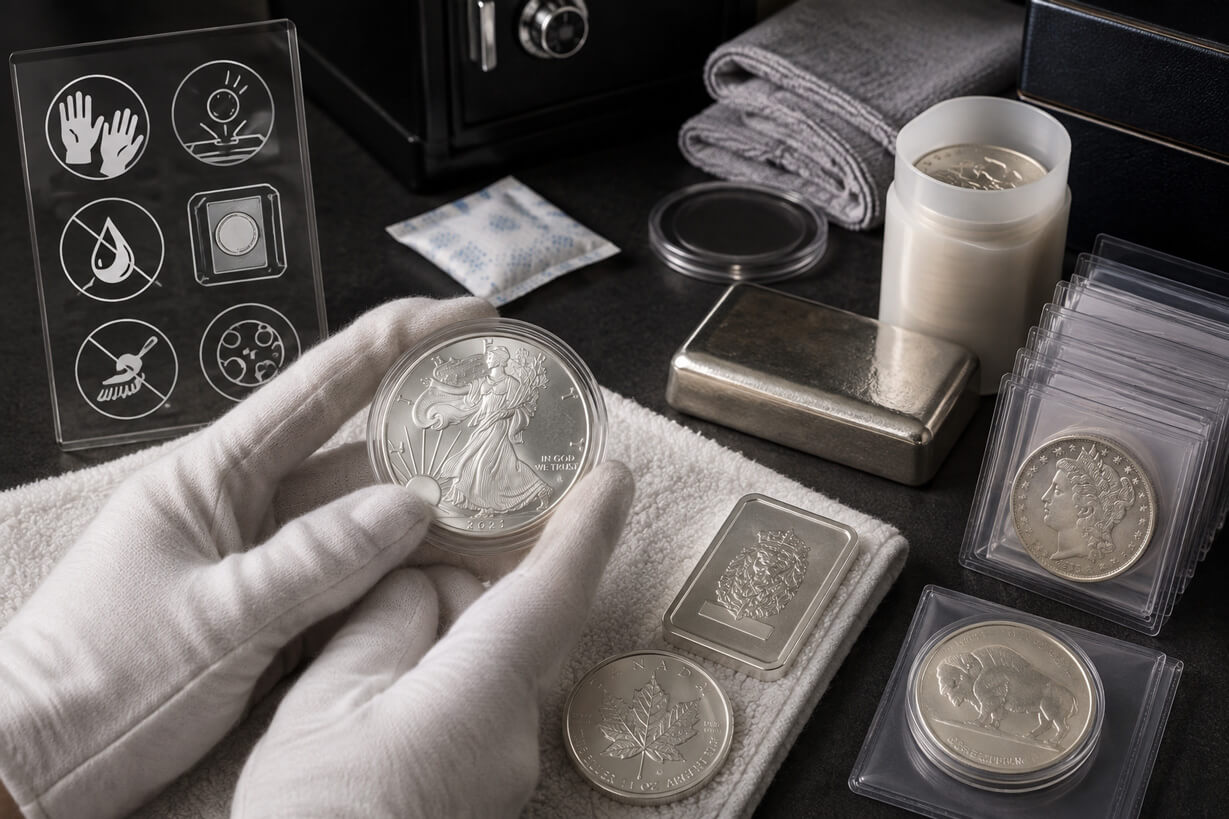
Unless the silver coin, round, or bar comes in a protective capsule or sleeve, always handle it with cotton gloves. Fingerprints on coins, due to natural oils from the skin, can become rather unsightly, often turning yellow over time. These marks are virtually impossible to remove without damaging the silver and they will affect resale value, even if only minimally.
2. Handle over a soft surface
If you decide to handle your silver, please do so above a table with a towel or cloth underneath the coin. This is simply in case you happen to drop the coin. Coins that have dings on the rim as a result of being dropped lose much of their value above the spot price. Investors who purchase coins individually (less than original mint tubes of 20 or 25 coins), often purchase them with capsules. Capsules are ideal in this scenario because if dropped, the capsule will take the punishment, not the coin.
3. Avoid moisture
Store your coins in a dry place. Although you may feel that the kitchen and the bathroom are excellent hiding places, it is not a clever idea. This is especially pertinent if the silver is not housed in original tubes, capsules, or packaging. These areas are often full of moisture, which ultimately mark the silver over time.
4. Keep the flip
If you have purchased less than 20 or 25 coins from a specific mint and you did not receive an original mint tube, your coins were sold in coin flips. These flips may look flimsy, but they are non-PVC plastic. They are ideal for long-term storage outside of tubes. In other words, the coin flips are non-plasticised and contain no chemicals that will discolour the silver. So do not remove them from these flips and wrap them in other materials that may lead to discolouration.
5. Do not clean
Please do not attempt to clean your coins with any chemical cleaners. This is particularly relevant when considering tarnish. If there is oxygen, silver tarnishes, full stop. Should you find that some of your silver coins or bars have begun to show tarnish marks, do not attempt to clean them. Light tarnish does not affect the resale value of your silver. Only fully exposed silver with very dark (often black) tarnish will have an effect on the resale price.
6. Ignore milk spots
Milk spots appear on coins over time. The white or off-white colouring bears a resemblance to milk – hence the name. Some coins may have milk spots even as they arrive from the mint. In short, they are the result of the manufacturing process of high purity silver, particularly during the tempering stage, where coins are baked and cooled to prevent brittleness. If chemicals like borax are not fully removed from the coin’s surface before annealing, residues can remain embedded in the metal. Milk spots should not concern bullion investors because they are a type of tarnishing and do not damage or erode the coins. This isn’t ideal for presentation purposes but as a physical asset it won’t affect sale value.
Keep the above practical point in mind, and I can assure you that you will receive the best possible price for your bullion when you feel it is time to sell a portion of your silver stash.
If you have any questions about your bullion, our team is always happy to help.